|
|
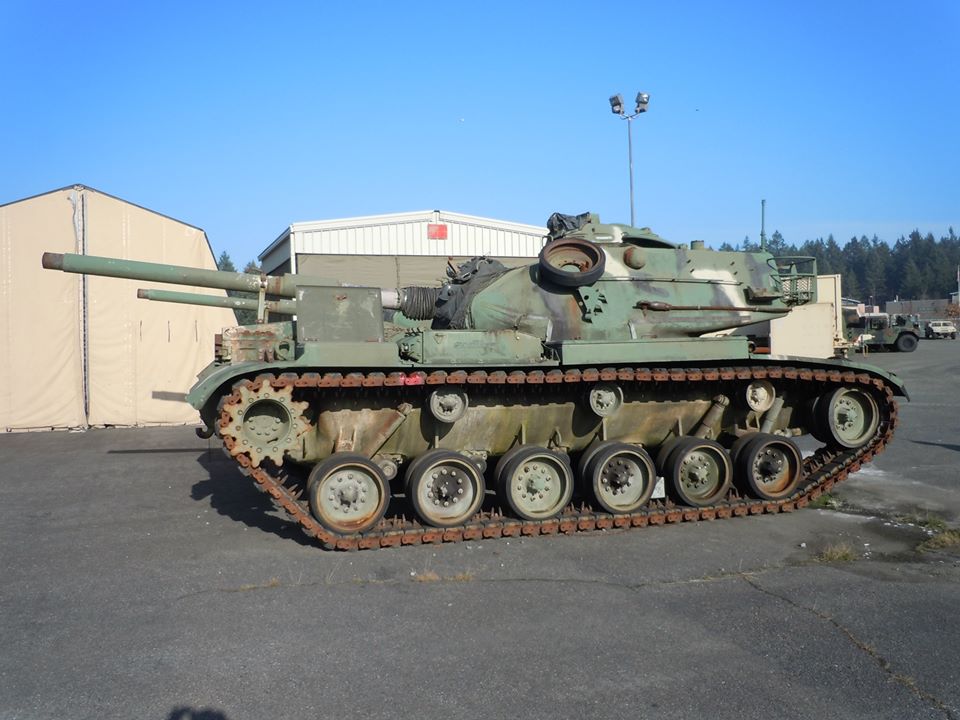
M60A3
PATTON TANK
In 1978, work began
on the M60A3 variant. It featured a number of technological
enhancements, including smoke dischargers, a new flash-lamp
pumped ruby-laser based rangefinder (AN/VVG-2) that could be
used by both commander and gunner, and an M21 ballistic computer,
and a turret stabilization system. M60A3 main battle tank moves
along a street in Germany during Exercise REFORGER '85. Late
production M60A3s omitted the commander's cupola (Israel Defence
Force armor doctrine required tank commanders to fight commander-exposed,
and it was discovered that non-penetrating hits upon the vehicle
could dislodge the cupola from its mount while the commander
was in it). The remote-controlled M85 machine gun was relatively
ineffective in the anti-aircraft role for which it was designed
compared to a conventional pintle mount. Removing the cupola
lowered the vehicle's relatively high silhouette. The cupola's
hatch also opened toward the rear of the vehicle and was dangerous
to close if under small-arms fire owing to an open-locking mechanism
that required the user to apply leverage to unlock it prior
to closing.[citation needed] The M60A3 was phased out of US
service in 2005,[12] but it has remained a front-line MBT into
the 21st century for a number of other countries. While overall
a less advanced tank than the M1 Abrams, the M60A3 did have
some advantages over some M1 models:[citation needed] The M60A3
TTS had a better thermal imaging system than that of M1 tanks
up into the 21st century, when many M1s were upgraded with newer
2nd generation systems. The M60A3 had an exterior phone for
infantry to talk directly to the crew inside, though this feature
was removed from most M60A3s in its later life. This feature
was also installed on some M1 tanks with the TUSK upgrade kit.
The M60A3's diesel engine had lower overall performance, but
also it had lower cost, requires less maintenance, and better
fuel efficiency. The exhaust temperature of an M1's turbine
is very high, which makes it dangerous for infantry to take
cover behind it. This is not the case with the diesel engine
on the M60. The escape hatch located under the hull of the M60A3
is not present on the M1 Abrams making it more difficult for
the crew to escape a battle-damaged Abrams or evacuate casualties
than from an M60A3. The M60 series' M68A1 105 mm main gun fires
a much wider variety of ammunition than the 120 mm smoothbore
on the M1A1 series, because doctrine only required APFSDS and
HEAT. The M60 series has instrumentation that allows indirect
fire as ad-hoc artillery if needed by virtue of having a compass
on board.
|
|
|
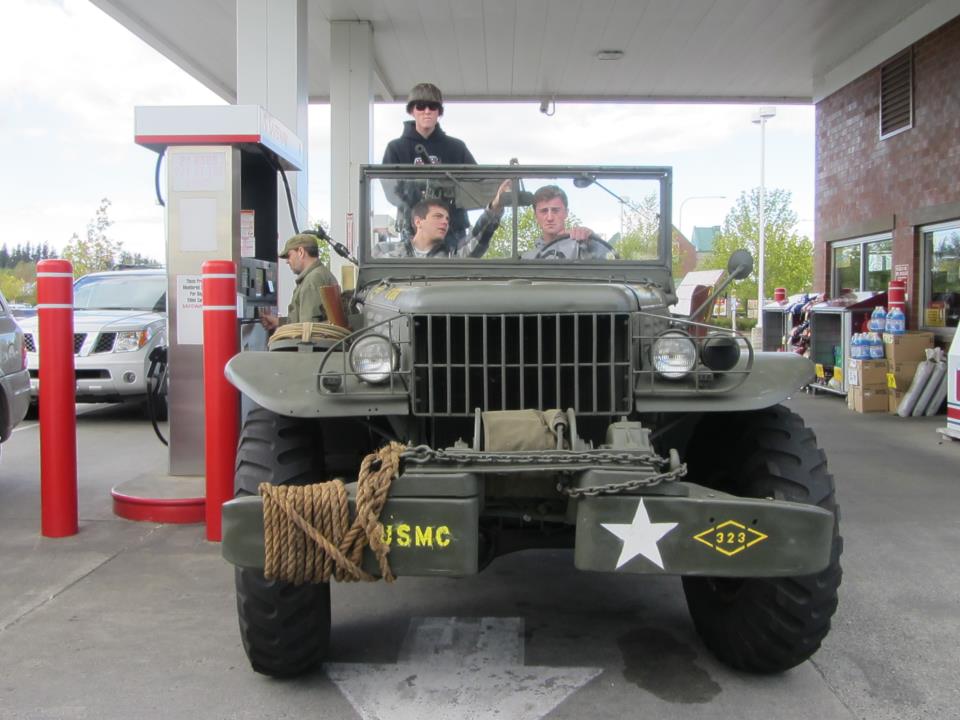
WC 55,
1943 3/4 Ton Dodge Truck
The Dodge WC series was a range
of light military trucks produced by Dodge during World War II.
The series included weapon carriers, telephone installation trucks,
ambulances, reconnaissance vehicles, mobile workshops and command
cars. They were replaced after the war by the Dodge M-series vehicles.
WC was a Dodge model code: W for 1941 and C for half-ton rating.
The C code was retained for the ¾ ton and 1½ ton 6×6 Dodges.
|
|
|
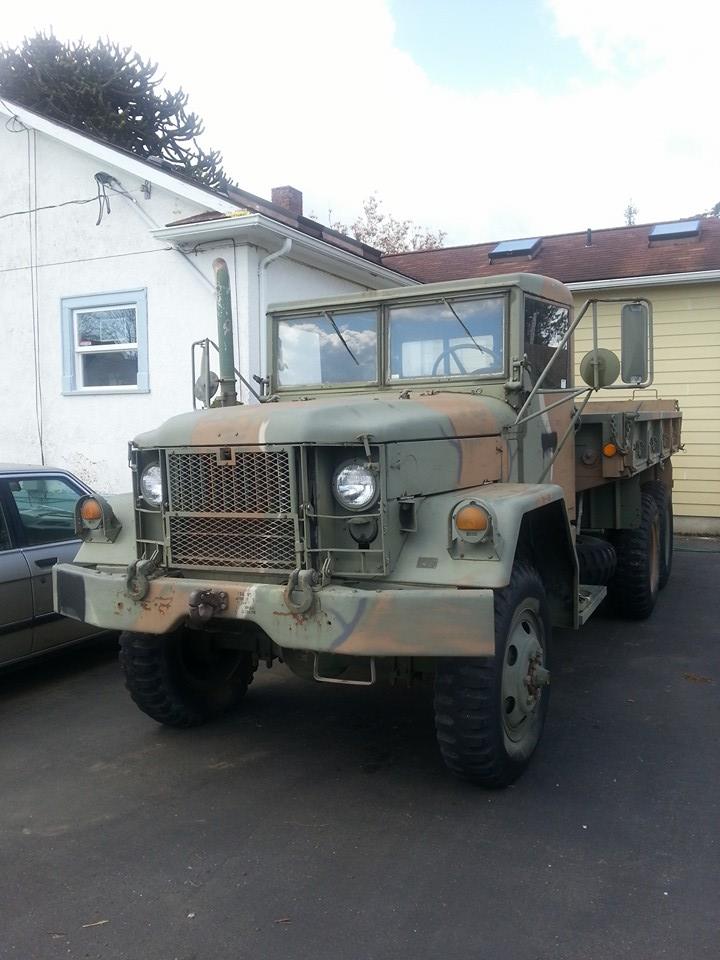
M35 2½-Ton
Cargo Truck
The M35 2½-ton cargo truck is
a long-lived 2½ ton, triple-axle, 6x6 cargo truck initially deployed
by the United States Army and subsequently utilized by many nations
around the world. Over time it evolved into a family of specialized
vehicles. It would not only inherit the World War II GMC CCKW's
famous "Deuce and a Half" nickname but forge its own legacy. The
M35 started as a 1949 REO Motor Car Company design for a 2½ ton
three-axle all wheel drive off-road truck. This original 6-wheel
M34 version was quickly superseded by the 10-wheel M35 design.
While the basic M35 cargo truck is rated to carry 5,000 pounds
(2,300 kg) off-road or 10,000 pounds (4,500 kg) on roads, they
have been known to haul twice as much as rated. Trucks in this
weight class are considered medium duty by the military and Department
of Transportation.
|
|
|
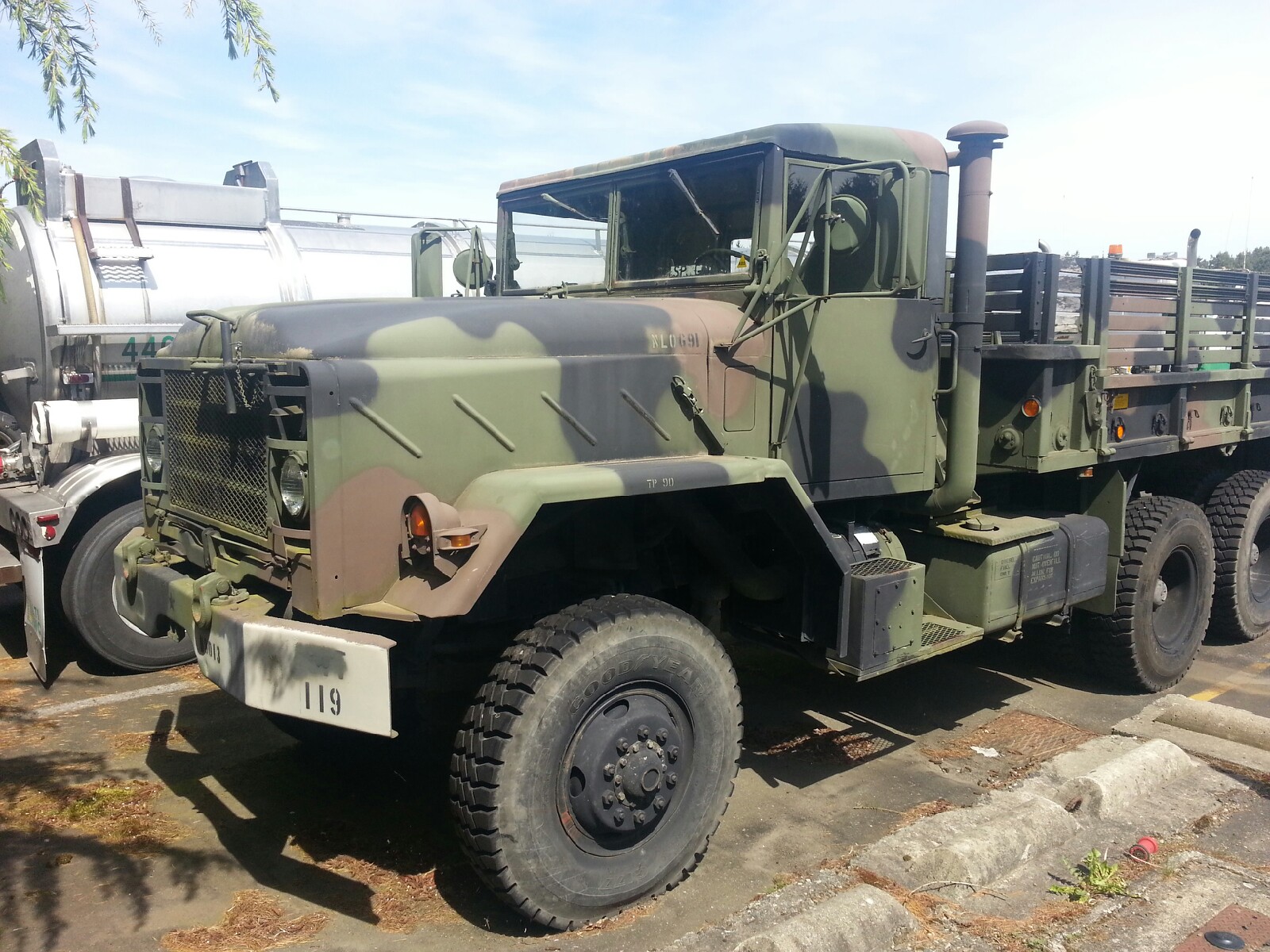
M923 5-Ton
Truck
M-923 Truck, Cargo 5 Ton
6x6 The M-923 Truck, Cargo, 5-ton, 6x6 is part of the M-939 Series
of 5 ton 6x6 trucks. Details of the history, model numbers, and
configurations of the M939-series of trucks are on the linked
page. The M923 is a dropside cargo truck of standard wheelbase.
The M925 is the same vehicle equipped with a winch. USMC M923
(and M925) cargo trucks had an updated dropside cargo body with
five drop sections (one rear, two on each side), compatible with
ISO containers.
|
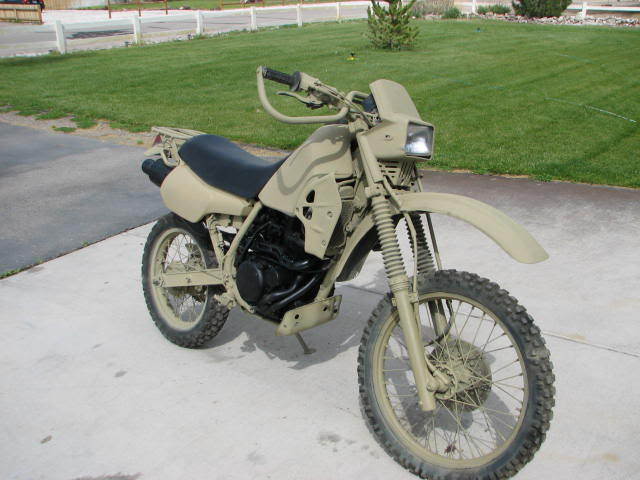 |
Kawasaki
Military
KLR 250
Kawasaki KLR-250 Military Motorcycles
are used by the U.S. Marine Corps, Special Operations and USAF
as an alternative means of transporting messages, documents, or
light cargo and conducting reconnaissance in the field. The 1991
model KLR 250-D8 replaced the 1984 KLR 250. Kawasaki KLR 650 motorcycles,
designated M1030 B1 or M1 Dual Purpose Military Motorcycles, were
introduced to replace the Kawasaki KLR 250 models.
|
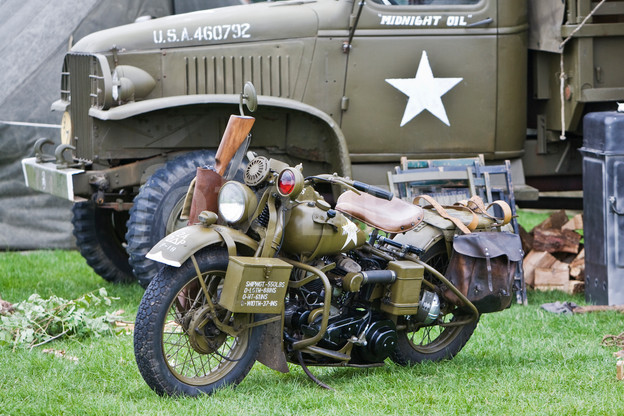 |
Harley-Davidson
WLA
The Harley-Davidson WLA is a Harley-Davidson
motorcycle that was produced to US Army specifications in the
years during and around World War II. It was based on an existing
civilian model, the WL, and is of the 45 solo type, so called
due to its 45-cubic-inch (740 cm3) engine displacement and single-rider
design. The same engine, in a slightly lower state of tune, also
powered the three-wheeled Servi-Car (the "G" family), leading
to the "solo" distinction.
|
| |
|
|